
A Sydenham house gets rid of water in three separate ways. Each one has its own pipe and its own end point, and each needs a different kind of care. When people mix them up, basements flood and septic beds fail early. Start by working out which is which at your house.
Three systems leave the house, and they do not join
- Stormwater. This is rain and snowmelt off the roof, the driveway and the road. In Sydenham, Harrowsmith, Inverary, Perth Road and Battersea, the township's stormwater pipes carry stormwater and nothing else. Nothing from inside the house belongs in them.
- The septic line. Every toilet, sink, tub, shower and washing machine drains into the building drain, and the building drain runs to your own septic tank. The Township of South Frontenac does not own or run sanitary sewers, so there is no sewer under the street to fall back on. Whatever goes down a drain ends up in your tank and your leaching bed.
- Groundwater at the foundation. Depending on the age of the house, this means footing tile, a sump pit, a basement floor drain or none of them.
So "drainage cleaning" can mean two jobs. Outdoors, it means keeping grates, culverts, ditches and downspouts open so surface water runs away from the house. Indoors, it means drain cleaning in the plumbing sense: clearing the pipes that carry waste from the fixtures out to the tank.
Storm drains: keep the grate and the outlet open
To clean a storm drain, clear the top and keep the water path open. You do not reach into the pipe.
- Rake leaves, sand and litter off the grate at the road or the catch basin near your driveway. Bag the debris. Do not hose it down the grate.
- If a culvert runs under your driveway, clear both ends of the pipe so water can get in and out.
- Before the spring thaw, break up ice and packed snow around grates and culvert ends so the melt has somewhere to go.
- Do not pour oil, paint, solvent or wash water into a storm grate. It runs untreated to the ditch or the lake.
If you clear the top of a township grate and water still sits on it, the blockage is in the pipe below. That pipe belongs to the township, so report it to the township office.
Downspouts belong to the stormwater side too. Point them onto the ground and away from the foundation, with an extension if the water pools against the wall. A downspout should never feed the floor drain or the septic line.
Your floor drain: find out where it goes
What sits under the basement floor depends on when the house was built.
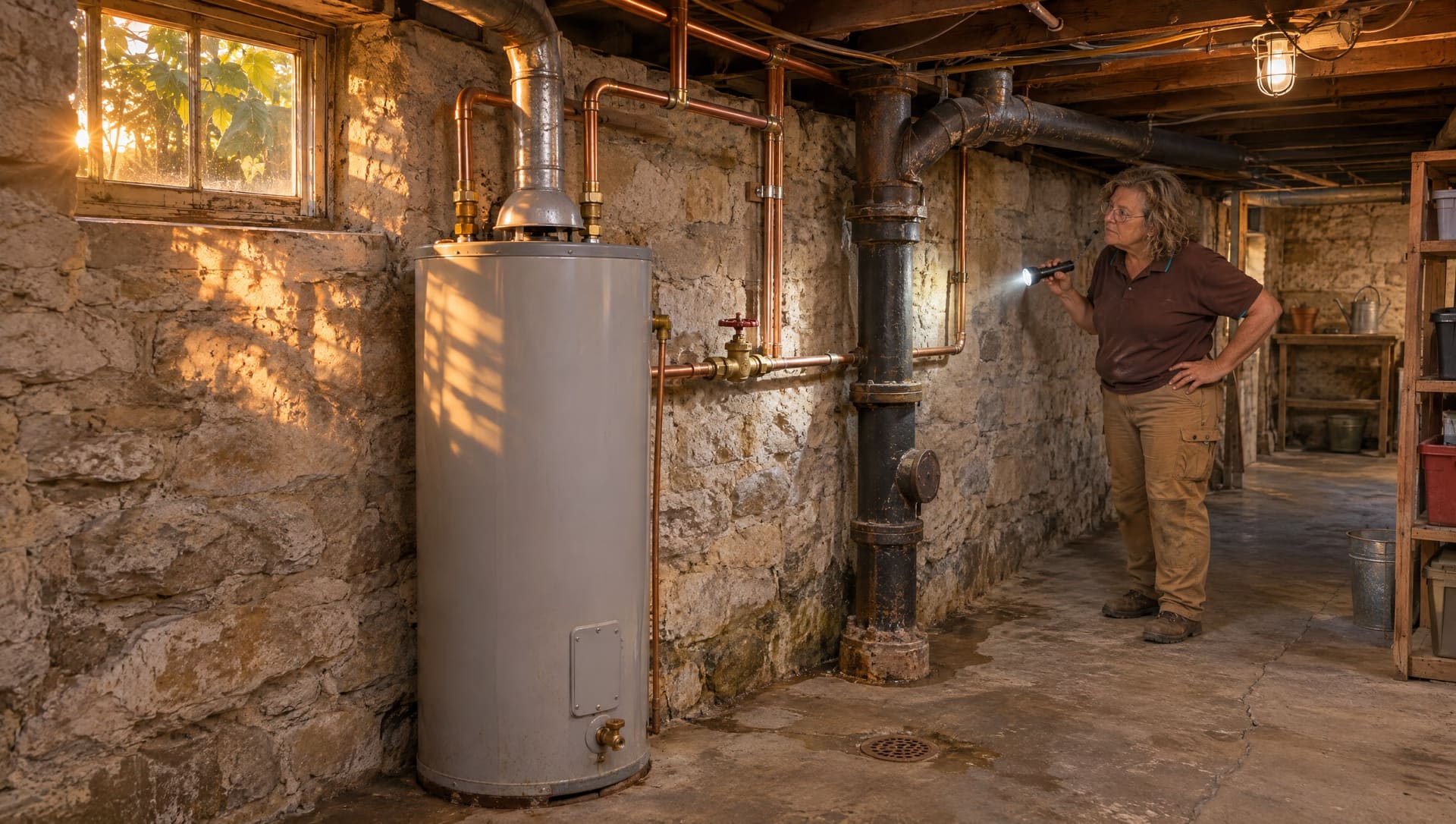
- George Street and Mill Street, 1860s to about 1900. These houses usually have stone basements with no footing drain and no sump. The cast-iron stack runs into clay tile out to the septic tank. Any floor drain was added later, so you cannot assume where it goes.
- Houses built from 1961 to 1980. Most have a basement floor drain and footing tile, with copper water lines and cast-iron or plastic drains running to the tank and leaching bed.
- Newer houses on Rutledge Road and Stage Coach Road. Expect plastic drains to a septic system and a sump pump on the footing drains. Here the sump pump does the work the floor drain does in older houses.
If your house has both a floor drain and a sump pit, you can test where the floor drain goes. Pour a bucket of clean water into the floor drain and watch the pit. If the water level in the pit rises, the floor drain runs to the sump. If it doesn't, the floor drain most likely joins the building drain and goes to the septic tank.
A floor drain has a trap, which holds water as a seal. If the basement smells like a septic tank, the trap has probably dried out. Pour a bucket of water into it every month or so, more often in a dry winter.
The sump pump should discharge outside, onto the ground and away from the foundation. It should never discharge into a laundry tub, the floor drain or the septic line. Groundwater pumped into a septic system floods the leaching bed with water it was never sized for. For testing the pump before the thaw, see how a sump pump works.
The septic line: a blocked pipe or a full tank
In a Sydenham house, drain cleaning means clearing the line from the fixture to the septic tank. Before anyone clears anything, work out where the blockage is.
- One slow fixture: the problem is in that fixture's trap or branch line, usually hair at a tub or grease at the kitchen sink. Use a plunger, or take off the trap under the sink and clean it.
- Several fixtures slow at once, or the lowest drain backing up when the washer empties: the blockage is in the main building drain or at the tank. Stop running water and laundry until it is sorted.
- Gurgling toilets, soggy ground over the leaching bed or a sewage smell in the yard: suspect the tank or the bed, not the pipe.
Find your last pumping receipt. If the tank is overdue, clearing the pipe will only buy a few days. Have the tank pumped and checked by a septic contractor. Do not lift the tank lid and lean in, and never climb into a tank, because the gases inside can kill. The County directs questions about septic system inspections to the township.
What a plumber does on the line to the tank
- Asks which drains are slow and since when, then finds the cleanout, usually a capped fitting near where the building drain leaves the basement wall.
- Clears the line mechanically, with a cable or with water under pressure, as far as the tank inlet. Strong chemicals are a bad idea on a septic system because they end up in the tank with everything else.
- Runs a camera down the line to see why it blocked. In the older houses on George Street and Mill Street, that is often roots at the joints of the clay tile or a crack. In 1960s and 70s houses, look for ageing cast iron and a pipe that sags and holds water.
- Compares what the camera shows with the level in the tank to tell whether the pipe or the tank is the problem.
You should get a written price before any of that work starts. For more on how that price is put together, read how a plumber prices a job.
If the camera finds a broken section that has to be dug up, two rules apply. First, request a locate through Ontario Dig Authority before any digging. Public locates do not cover private lines, including the pipe from your house to your tank, so a camera with a locating transmitter is used to find it. Second, plumbing in Ontario is governed by Part 7 of the Building Code, Ontario Regulation 163/24, and changes to drains generally need a building permit. The township's building department will tell you whether your job does. Repairs to that line are covered under sewer repair.
Keeping drains clear
- Put strainers in the tub and shower, and empty them.
- Wipe grease and food scraps from pans into the garbage before washing. Grease sets in the line and floats in the tank.
- Spread laundry over the week. Several loads in one day send a lot of water to the leaching bed at once.
- Get the tank pumped on the schedule your septic contractor sets, and keep the receipt.
- Keep the floor drain trap topped up.
- Keep downspouts, sump discharge and the storm grate apart from the septic line.
- Know where your cleanout and septic tank lid are before there is a backup, so nobody has to search for them while water is rising.
For more on plumbing across the village and nearby communities, see the guides and the areas we serve.
If a drain in the house is slow or the basement drain is backing up, Sydenham Plumbing and Drain handles drain cleaning on the line out to your septic tank.