A sump pump is easy to forget because it does nothing for months. Then the snow melts, the ground fills up, and it has to run without stopping. This guide covers what the pump does, how to test it before the thaw or a heavy storm, and whether your house needs a battery backup. It is written for houses in Sydenham and the communities around it, where every house drains to its own septic system.
A sump pump moves groundwater out from under the house
The pump sits in a pit in the basement floor, called the sump pit. Perforated pipe runs around the outside of the foundation at footing level. That pipe is the footing drain, or weeping tile. It collects groundwater before it can push through the basement walls or floor, and carries it into the pit.
When the water in the pit rises, a float rises with it. At a set height the float switches the pump on. The pump pushes the water up a discharge pipe and out of the house. When the level drops, the float drops and the pump stops.
There are three other parts you should know:
- The check valve. This is a one-way valve on the discharge pipe just above the pump. It stops the water in the pipe from running back into the pit each time the pump shuts off.
- The discharge line. This is the pipe that takes the water out through the wall and away from the foundation.
- The outlet. The pump plugs into it. If the outlet loses power, the pump stops.
If any one of these fails, the water stays in the pit and eventually rises over the rim onto the floor.
Which Sydenham houses have one
Whether you have a sump pump depends a lot on when the house was built.
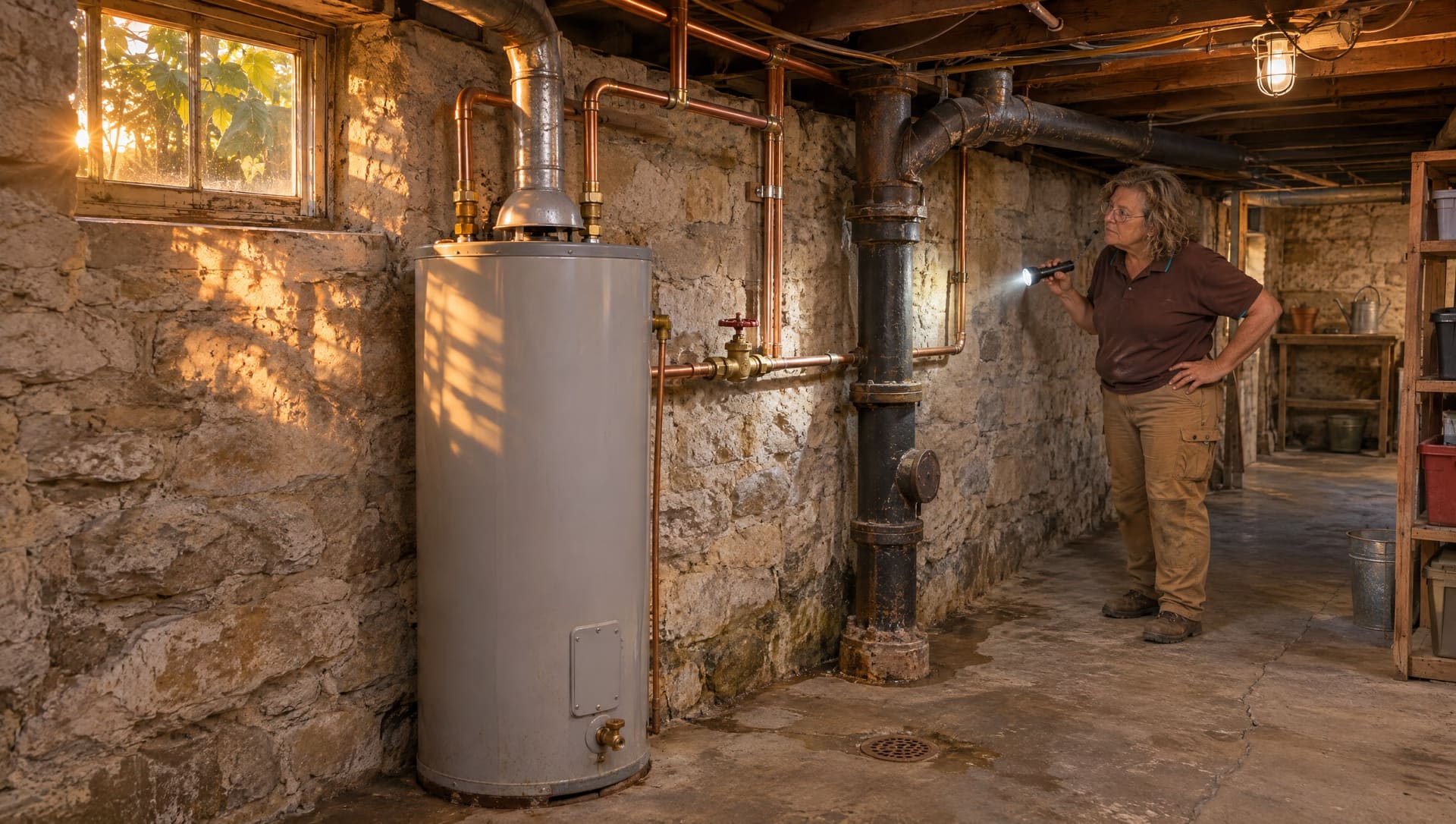
- George Street and Mill Street, 1860s to about 1900. These houses usually have stone basements with no footing drain and no sump. Water seeps through the foundation in spring. A pump can only help if there is a pit and drainage for it to collect from, so that is a bigger job than swapping a pump.
- Houses built from 1961 to 1980. These usually have footing tile and a basement floor drain, and often no sump pump. Where the footing tile drains, and how well it still works, is worth knowing before spring.
- Newer houses, like the one-acre lots proposed on Rutledge Road at Stage Coach Road. Houses of this period are typically built with a sump pump on the footing drains, and the pump is usually more likely to fail than any pipe.
If you are not sure whether you have a pump, look for a round pit with a lid in a corner of the basement floor, and a plastic pipe coming up out of it and through the wall.
Sump water goes outside, never into the septic system
Sydenham has no municipal sewers. The drains inside the house run to your own septic tank and leaching bed. The township's stormwater pipes in Sydenham, Harrowsmith, Inverary, Perth Road and Battersea only carry stormwater. Nothing from inside the house goes into them.
So the sump pump should not discharge into a laundry tub, a floor drain or any pipe that runs to the septic tank. In spring that is a lot of clean groundwater, and it can flood the leaching bed when the bed is already wet. If your discharge goes into a drain inside the house, have it moved. Our guide on what drains where in a Sydenham house explains how to work out where each pipe goes.
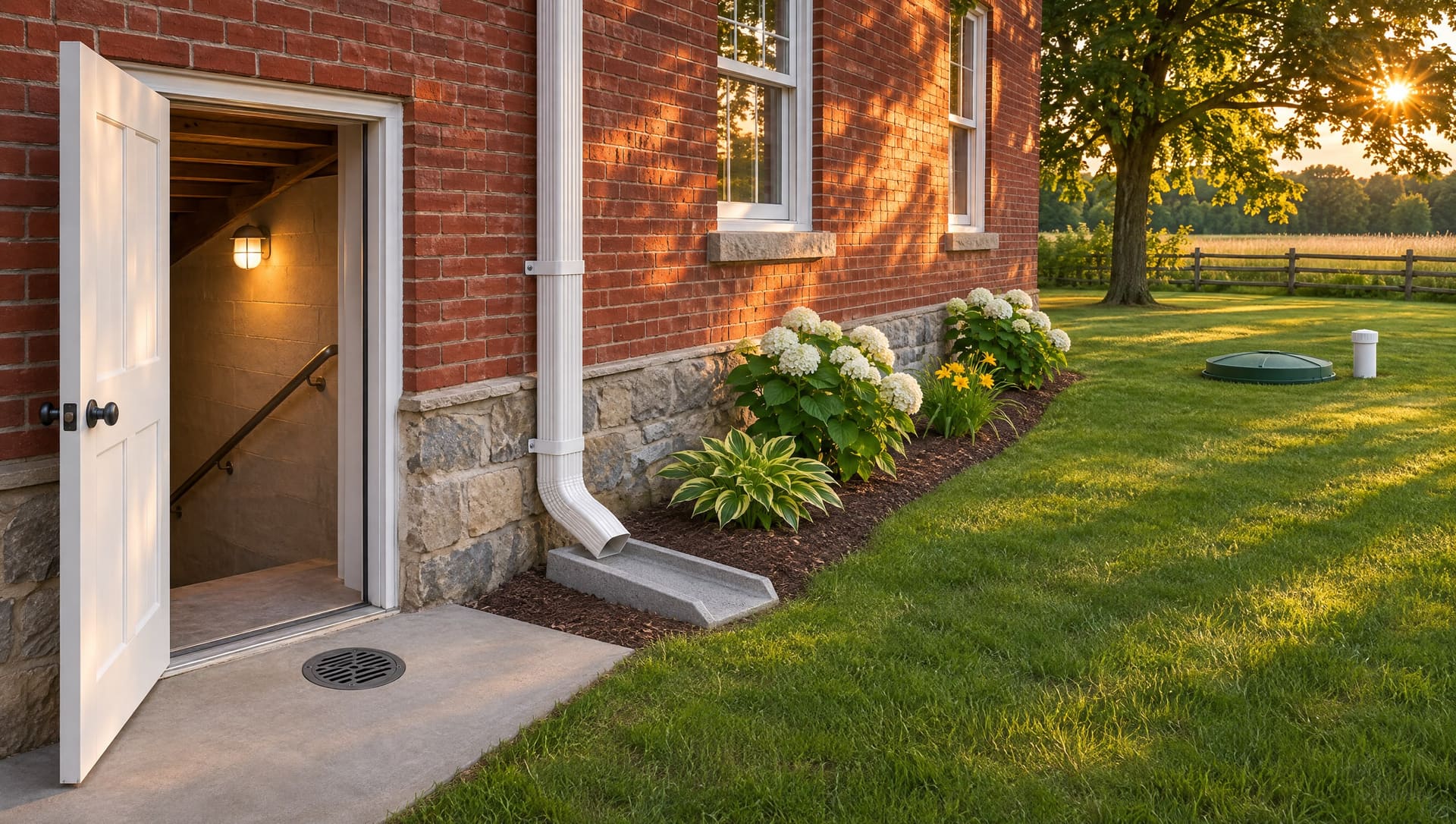
Outside, the discharge should end well clear of the foundation, on ground that slopes away from the house. Keep it away from the leaching bed and from a well if you have one. If it ends right at the wall, the same water soaks back down to the footing drain and the pump keeps pumping it in a loop.
Test it before the thaw
Do this in late winter, before the snow starts to melt, and again before any big rain. It takes about ten minutes.
1. Check the power. Make sure the pump is plugged in, the cord is not damaged and the outlet works. If it is on a ground-fault outlet that has tripped, the pump is dead until you reset it.
2. Lift the lid and look in. Take out any debris, gravel or silt sitting around the pump. Make sure the float can move freely and is not caught on the pit wall or the cord.
3. Fill the pit. Pour water in slowly from a bucket until the float rises. The pump should start on its own.
4. Watch it run. It should empty the pit quickly and shut off cleanly. Listen for grinding or rattling, and watch for a pump that hums but moves no water.
5. Check the check valve. When the pump stops, water should not run back down into the pit. If you hear a gush back into the pit, the valve is not holding.
6. Go outside. Find where the discharge ends. Clear away snow and ice, make sure the pipe is not frozen or crushed, and add an extension if the water lands near the wall.
If the pump does not start when the float rises, lift the float by hand. If the pump runs then, the float or the switch is the problem. If it does not run at all, check the motor or the power supply.
Signs the pump is near the end of its life
Pumps wear out, and a pump that has run since the house was built has a lot of hours on it. Plan a replacement before spring if you see any of these:
- it cycles on and off often when the pit is barely filling
- it runs and runs without bringing the water level down
- it gets louder, or you see rust or corrosion on the casing
- the pit has flooded once already, even briefly
It is better to replace a tired pump on a dry day in winter than on the day the pit is filling.
Does a sump pump need a battery backup
The main pump runs on house power, and spring storms and ice storms are also when the power goes out. If the power is out while the ground is full, the pit fills and the basement floods, even with a pump that works.
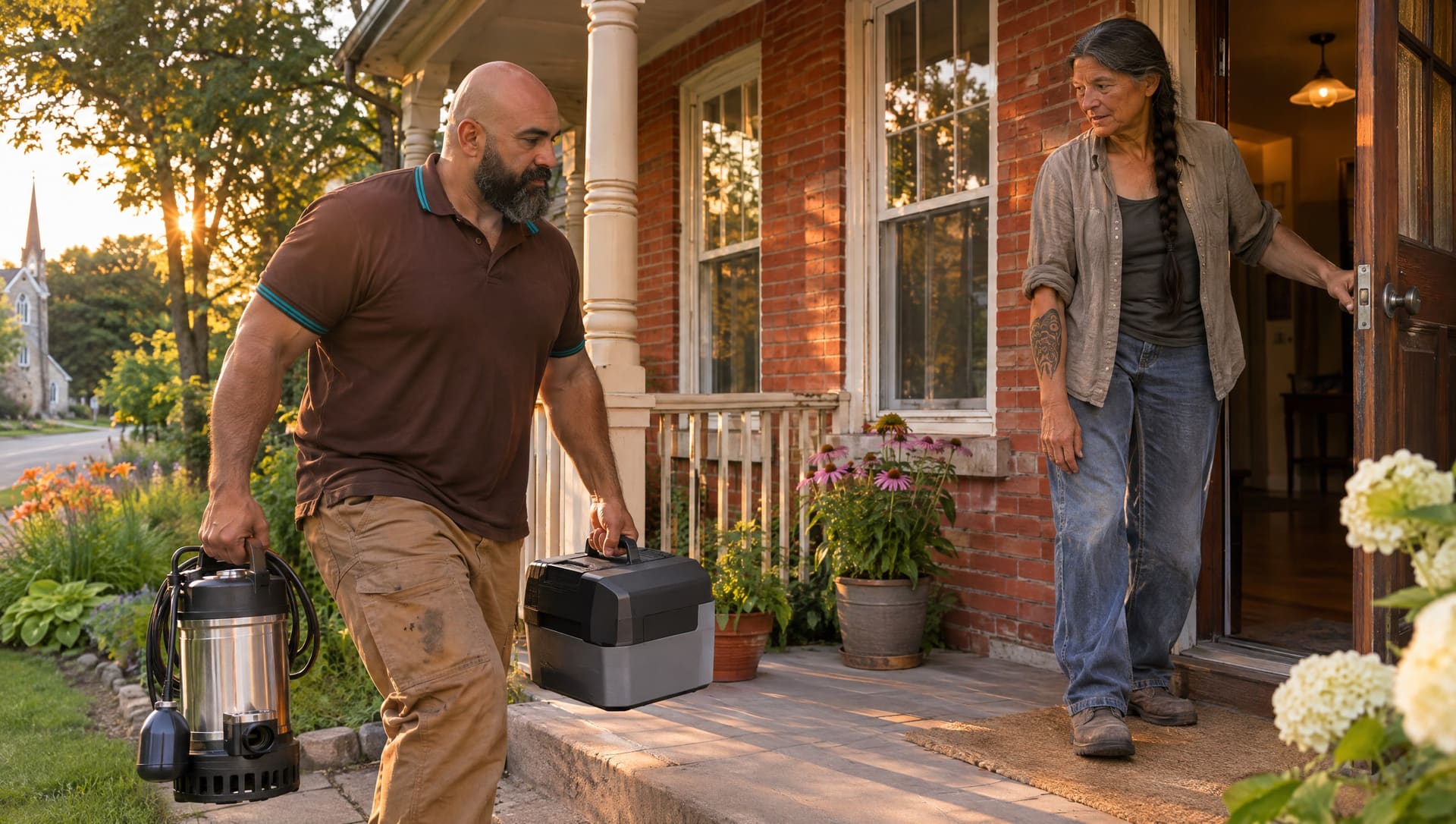
A battery backup is a second pump, or a second power source for the main pump, that takes over when the power cuts out or the main pump fails. These questions help you decide:
- Does your pump run often in spring? If the pit fills within minutes of the pump stopping, you need a backup.
- Is anything stored in the basement, or is the basement finished? If so, one flood will cost more than the backup.
- Are you away from home often in spring? A backup covers the hours when nobody is there to notice.
A water-powered backup uses pressure from the household supply to pump out the pit. It can work on Sydenham's municipal water. In Harrowsmith, Inverary, Perth Road, Battersea and other places on a private well, the well pump stops when the power does, so that type of backup has no water to run on. Use a battery unit or a generator instead.
A battery backup needs looking after too. Test it each time you test the main pump, by unplugging the main pump and filling the pit. Replace the battery when it no longer holds a charge.
When to bring in a plumber
Call a plumber if the pump fails the test, if the discharge drains to the septic system, or if you want a backup added. New plumbing and changes to drains generally need a building permit, and the township building department tells you whether your job needs one. Adding a pit to an older house that has no footing drain is a bigger job. Ask for a written price that lists the work before it starts. Our guide on how a plumber prices a job explains how that price is put together.
If your pump failed the test or you want a battery backup before the thaw, see sump pumps.